Most staging advice online has the same problem: it sounds exactly the same whether the home is in Madison, Miami, or Minneapolis. Declutter. Neutralize. Add a plant. Fluff the pillows. None of that is necessarily wrong. It just is not enough to tell a Dane County seller where to spend time and money on a specific property.
MHB starts with the national data, then makes the recommendation property by property. Our team handles roughly 500 to 700 closings in a typical year and has completed more than 3,000 transactions overall. That experience gives us a much better question than "what does the average seller do?" The question is: what does this home need to compete well in this market?
That is the difference between generic staging content and the way MHB actually works. We do not stage for staging's sake. We use preparation to support the pricing, photography, and buyer experience we are building for the home.
Why Staging Still Matters Without Staging Every Room
According to the National Association of Realtors, 29% of agents reported that staging increased the dollar value offered by 1% to 10%, and nearly half observed a shorter time on market. At the same time, only about one in five sellers' agents said they stage every listing.
We think both ideas can be true. Presentation matters, but that does not mean every home needs rented furniture in every room or a four-figure staging bill. MHB's seller process begins with a no-obligation consultation and home-prep guidance so we can decide what the property actually needs before the seller starts spending.
That is a client-first decision, not a cost-cutting reflex. Sometimes a vacant or awkwardly laid-out home genuinely benefits from professional staging. Sometimes the best return comes from decluttering, moving furniture, fixing a few distractions, and leaving the rest alone. A better brokerage should be willing to recommend either answer.
Start With the Rooms Buyers Actually Care About
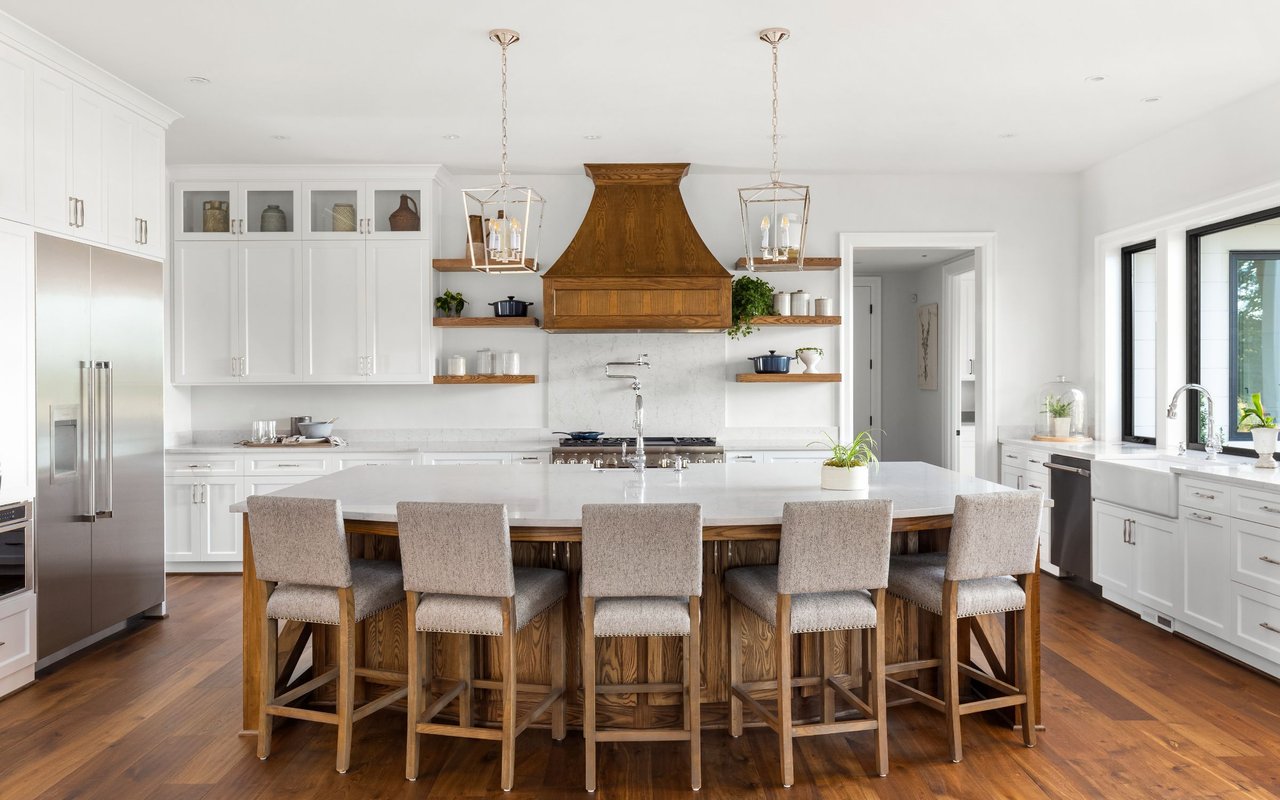
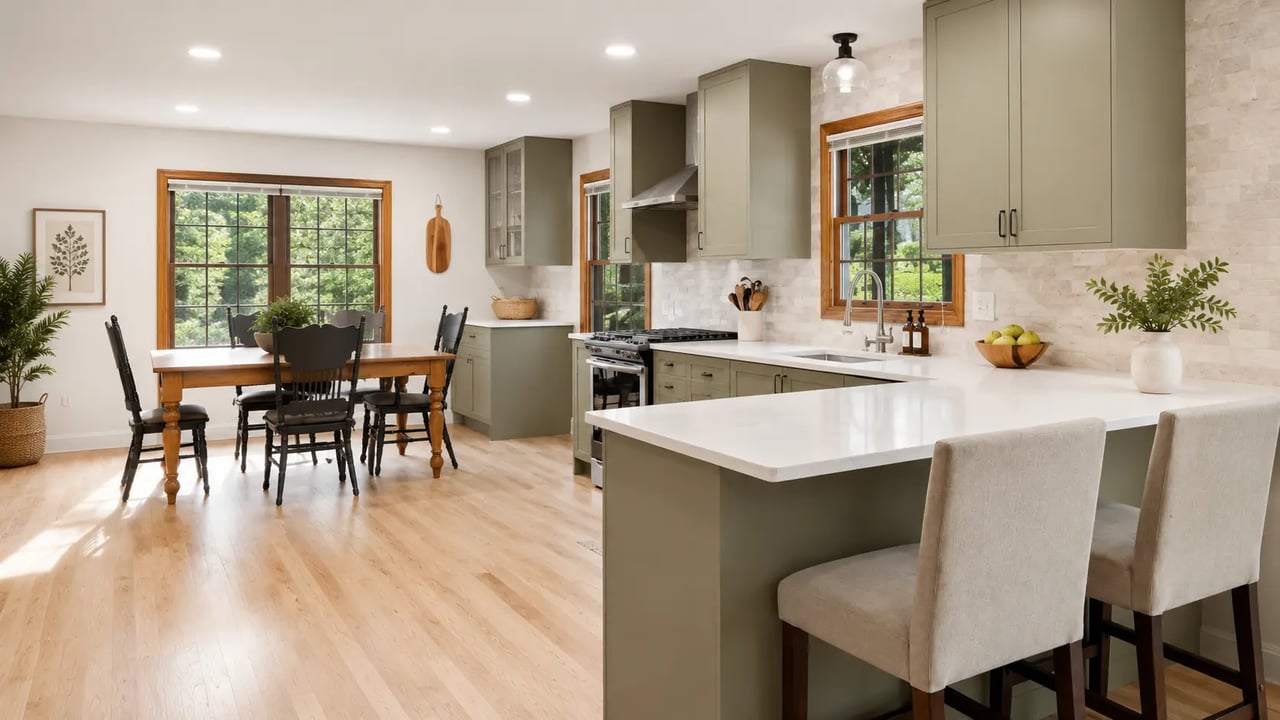
NAR's staging research consistently puts the living room, primary bedroom, and kitchen near the top of the list for buyer attention. Those are also the spaces where layout, scale, storage, and day-to-day livability become easiest to imagine.
At MHB, we use that as a starting point, not a universal rule. Our agents walk the home, look at how those rooms compare with competing listings, and decide where the seller's effort will do the most work. A beautiful kitchen may need almost nothing while an awkward living room needs furniture moved to make the flow obvious. Another home may have a primary suite that is already the strongest selling point and needs only a clean, neutral presentation.
That property-specific judgment is one reason MHB invests so heavily in agent quality. We hire full-time career agents, and new agents train under senior agents for at least two years. Sellers are not relying on a part-time agent's personal decorating taste; they are getting guidance shaped by a team with deep transaction experience.
Decluttering Comes Before Decorating
Before adding anything, MHB's own photo-and-showing checklist removes a lot. Clear kitchen countertops and sinks. Remove items from the refrigerator. Take down personal photos. Thin out knickknacks. Hide pet bowls and toys. Declutter dressers and nightstands. Put away used towels, floor mats, and cleaning supplies.
There is a practical reason for that order. Clutter hides square footage, interrupts sightlines, and makes a room about the current owner's things instead of the property itself. The fastest way to make many rooms feel better is not to buy decor; it is to let the home become visible again.
Our general guideline is restraint: roughly one intentional decorative item per shelf, table, countertop, or coffee table. It is specific because sellers should not have to guess what "declutter" means after an agent leaves the house.
Neutral Does Not Mean Empty
NAR reports that 83% of buyers' agents say staging makes it easier for buyers to envision a property as their future home. That does not require turning every house into a white-box showroom.
MHB's job is to find the line between personal and sterile. We may recommend removing family photos, kids' artwork, text-heavy wall decor, or taste-specific paint. We may also tell you that a room already feels warm and photographs well and does not need another dollar spent on it.
That willingness to say "leave it alone" is part of the brand promise. MHB was built to challenge the parts of traditional real estate that serve the agent or the process better than the client. Good staging advice should work the same way: recommend what helps the seller, not what creates the biggest project.
Small Fixes Matter Because Buyers Read Them as Signals
A loose cabinet hinge, peeling exterior paint, an overgrown shrub, or a scuffed doorframe may not change a home's fundamental value, but each one can become a small signal about maintenance. That is why MHB's prep checklist includes items as ordinary as mowing, trimming shrubs, cleaning landscaping, addressing peeling paint, and replacing a worn welcome mat.
These are not glamorous recommendations. They are useful recommendations. Our team would rather identify a handful of inexpensive distractions early than send a seller into a major renovation that is not supported by the property's price point or competition.
The same principle carries into MHB's 42-point market analysis. Pricing, condition, competition, and presentation are not separate conversations. They all affect how the home enters the market and what buyers compare it against.
When Professional Staging Is Worth Considering
NAR reports a median professional staging cost of $1,500, compared with $500 when the seller's agent handles staging. Those are useful national reference points, but they are not a prescription.
For MHB, professional staging is most useful when furniture is needed to explain scale, define an unusual space, or help a vacant home feel understandable. A well-furnished home may need only editing, repositioning, and a focused prep plan. The recommendation depends on the property and the competitive set, not on a default package.
MHB's selling model reinforces that philosophy. Staging and home-prep guidance are part of the process; we do not create multiple pricing tiers that force sellers to choose between a stripped-down experience and the level of strategy we believe the property needs.
How Staging Fits Into MHB's Full Selling Process
Staging is one step in a coordinated sequence. MHB starts with a no-obligation consultation, works through staging and home preparation, completes a 42-point market analysis and pricing strategy, then moves into professional photography, video, and drone imagery with an in-house photographer briefed on the home's selling points.
From there, the listing launches through the MLS, internet syndication, social media, and strategic digital advertising, followed by showings, offer strategy, negotiations, and contract-to-close management. The reason to talk about that whole process in a staging article is simple: staging is only valuable if it supports everything that comes after it.
MHB's agents do not disappear after the pillows are straight. The same team carries the strategy through the market.
The $5,000 Selling Strategy Is Supporting Evidence
MHB's single $5,000 Selling Strategy is $500 upfront and $4,500 at closing after a successful sale. It is not a discount tier and it is not a menu of packages. It is one consistent full-service selling model.
That fee structure matters because it shows what MHB means when we say we are willing to turn the traditional model on its head to do right by the client. But it comes after the more important point: the quality of the process. Full-time career agents, structured preparation, a 42-point analysis, professional marketing, experienced negotiations, and more than 3,000 transactions are the substance. The fee is evidence that the business model was rebuilt around the same client-first philosophy.
Frequently Asked Questions
How far in advance should I start staging before listing?
Two to three weeks is a practical window for most sellers because it leaves time to declutter, make small repairs, address paint or landscaping, and complete the MHB walkthrough before photography is scheduled.
Do I need to stage every room?
No. MHB prioritizes the rooms and fixes that matter for the specific home. The living room, primary bedroom, and kitchen are common priorities, but the final recommendation depends on the property's condition, layout, price point, and competition.
Does MHB include staging?
MHB's selling process includes staging and home-prep guidance. If a property would benefit from a separate professional staging service or rented furniture, the team can help evaluate whether that additional expense makes sense before the seller commits to it.
Ready to Build the Right Prep Plan for Your Home?
The most useful staging advice starts with the property, not a generic checklist. MHB's no-obligation consultation gives us a chance to see the home, understand your goals, and tell you what we believe is worth doing - and what is not - before you spend the money.