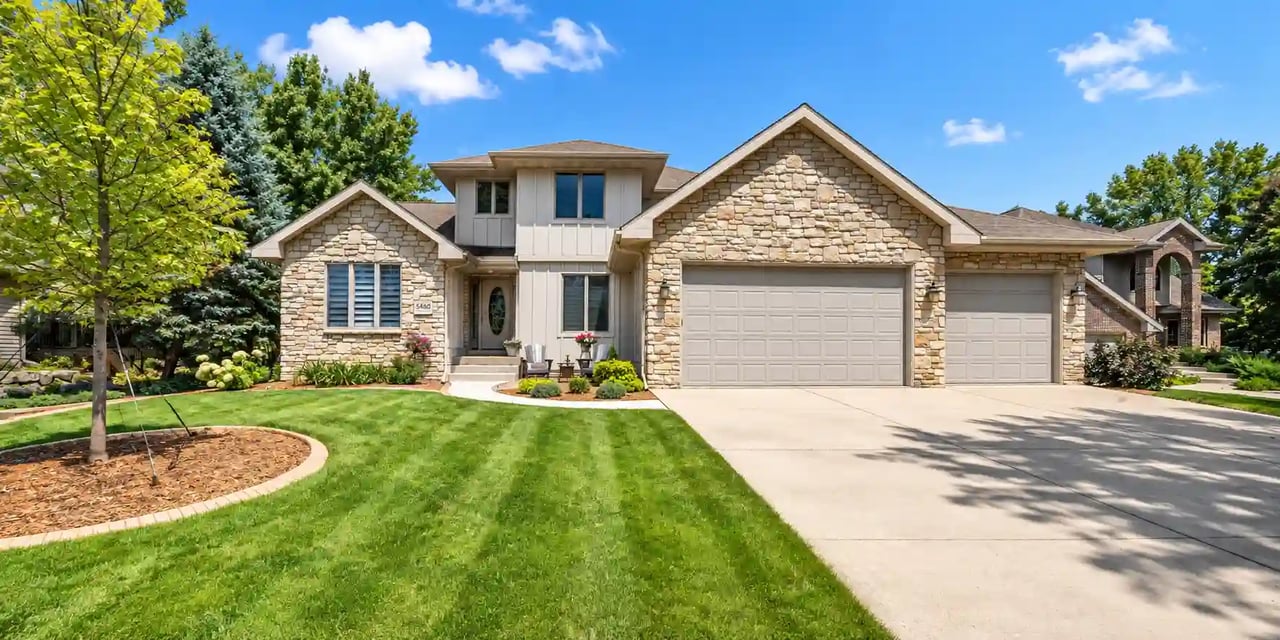
You found the house. The layout works, the location is right, and you can already picture yourself living there.
Then your agent calls with the news: Multiple offers are on the table.
Suddenly, buying a home feels less like an exciting milestone and more like a competition you aren’t sure how to win.
Buyers across Madison and Dane County can run into this, especially when a desirable, well-priced property attracts attention quickly.
But here’s something we’ve learned from helping buyers navigate thousands of real estate transactions: The strongest offer isn’t always the highest offer. And winning a bidding war shouldn’t mean taking on risks you don’t fully understand.
At MHB Real Estate, we don’t believe in following a one-size-fits-all playbook. Our agents evaluate the home, the seller’s priorities, the competition, and your financial comfort level before recommending a strategy.
Our job isn’t simply to help you win a house. It’s to help you make a smart decision about one of the biggest purchases of your life.
Here’s how we approach multiple-offer situations differently.
Step 1: Understand What Sellers Are Really Looking For
When several buyers want the same home, it’s easy to assume the seller will automatically choose the highest offer.
Price is important. In many situations, it’s the deciding factor.
But sellers are also evaluating something else: How likely is this offer to make it to closing?
A higher purchase price can come with financing uncertainties, complicated contingencies, or a closing timeline that doesn’t work for the seller.
Another offer might be slightly lower but give you more confidence the transaction will move forward smoothly.
At MHB, we help buyers look at the full picture before deciding how to compete.
That includes evaluating:
- The asking price compared with recent comparable sales.
- The property’s condition and potential inspection concerns.
- The strength of your financing and pre-approval.
- The seller’s preferred closing timeline, when known.
- The contingencies and other terms that may influence the seller’s decision.
- Your maximum comfortable purchase price and risk tolerance.
We also consider what’s happening in that particular segment of the Dane County market.
Competition for a home in an established Madison neighborhood may look different from competition for new construction in Verona or a single-family home in Middleton.
Our agents work throughout these communities and regularly participate in local transactions, giving us practical experience with how different situations unfold.
We don’t want you making decisions based on panic or assumptions. We want you making decisions based on preparation and informed judgment.
Step 2: Get Your Financing Ready Before the Competition Starts
A strong offer starts long before you find the right house.
At MHB, we start by discussing your financing situation.
Our buyer questionnaire helps us understand your budget, timeline, whether you’re already pre-approved, and whether purchasing your next home depends on selling your current one.
These aren’t just administrative questions. They directly influence the strategy we can build when it’s time to submit an offer.
Why Pre-Approval Matters
A mortgage pre-approval demonstrates that a lender has reviewed important financial information and assessed your ability to qualify for financing, subject to final underwriting and other conditions.
In a competitive situation, that preparation can help reassure sellers that you’re serious and financially ready to move forward.
When submitting an offer, our team uses your lender’s pre-approval letter and relevant financing details to help communicate the strength of your position.
But we also encourage buyers to understand the difference between what a lender may approve and what they can comfortably afford.
The last thing we want is for you to win a bidding war only to feel financially stretched after moving in.
The goal is to enter a competitive situation knowing your limits before emotions start influencing your decisions.
Step 3: Build a Competitive Offer Using More Than Purchase Price
This is where having an experienced real estate team can make a meaningful difference.
MHB uses a detailed competitive-offer strategy that evaluates multiple ways to make an offer attractive to a seller.
Some approaches involve price. Others focus on timing, certainty, and reducing obstacles between an accepted offer and closing.
Not every strategy is appropriate for every buyer or property. Our role is to explain the options, the risks, and how each term could affect your position.
Consider an Escalation Clause
An escalation clause is one option buyers may consider when they expect competing offers.
Rather than immediately offering your maximum purchase price, an escalation clause lets your offer increase by a specified amount above a qualifying competing offer, up to a maximum price you set.
For example, you might structure an offer to exceed a competing offer by $3,000, subject to an agreed maximum purchase price and the clause’s specific requirements.
MHB’s competitive-offer materials identify escalation increments commonly ranging from $2,000 to $5,000 or more, depending on the situation.
But an escalation clause isn’t automatically the right approach.
The seller may prefer a straightforward offer, and the clause needs careful structuring to address competing offers and verification.
Our agents help you decide whether it makes sense for the property.
Strengthen Your Earnest Money Deposit
Earnest money is a good-faith deposit that demonstrates your commitment to purchasing the home.
In the Madison market, an earnest money deposit of approximately 1% of the purchase price is a common starting point.
In a competitive situation, some buyers consider increasing that amount to 1.5% to 3% or more.
A larger deposit can show financial readiness and commitment, but you should understand the terms governing that money.
Depending on your contract and contingencies, you may get your earnest money back if the transaction doesn’t move forward for a protected reason. In other circumstances, you could risk forfeiting it.
MHB’s agents explain these distinctions before recommending changes to an earnest money deposit.
Offer Flexibility Around the Closing Date
Sometimes the seller’s biggest concern isn’t squeezing another few thousand dollars out of the sale.
It’s figuring out how and when they’re going to move.
If a seller needs additional time to relocate, flexibility around the closing date can make your offer more appealing.
In certain situations, buyers may also consider allowing the seller to remain in the property for an agreed period after closing.
These post-closing occupancy arrangements require careful consideration of timing, responsibilities, costs, insurance, and other contractual protections.
Our team helps evaluate whether that flexibility makes sense for your own moving plans.
Sometimes the smartest competitive advantage comes from solving a problem for the seller rather than simply offering more money.
Step 4: Know When to Protect Yourself and When to Consider Flexibility
One of the most consequential decisions in a multiple-offer situation involves contingencies.
You may hear that other buyers are waiving inspections or appraisal protections to make their offers more attractive.
But eliminating contingencies can expose you to significant financial risk.
At MHB, we believe you deserve to understand that risk before making a decision.
In some situations, alternatives are worth discussing.
Inspection Buffers: A Potential Middle Ground
A home inspection can identify issues that aren’t visible during a showing.
Waiving an inspection contingency entirely may make an offer more appealing to a seller, but it can also leave a buyer responsible for unexpected repairs.
One strategy MHB discusses with buyers is an inspection buffer.
Under this approach, a buyer may agree not to object to qualifying inspection findings unless the estimated cost of identified defects exceeds a specified threshold.
For example, a buyer might establish a $5,000 inspection buffer.
MHB’s competitive-offer materials describe inspection buffers ranging from approximately $1,000 to $10,000, depending on the buyer and situation.
This can reassure sellers that minor issues won’t necessarily reopen negotiations while allowing the buyer to retain certain contractual protections.
However, an inspection buffer still involves financial exposure, and its exact effect depends on the offer language.
We help buyers understand those tradeoffs before deciding whether this strategy fits their circumstances.
Appraisal Buffers: Understanding the Financial Commitment
In a competitive market, a home may sell for more than its appraised value.
That can create a problem when the lender bases financing on the appraisal rather than the agreed purchase price.
An appraisal buffer is one way buyers may address this concern.
For example, a buyer might agree to cover an appraisal shortfall of up to $10,000, subject to the offer's terms.
MHB’s competitive-offer materials discuss appraisal buffers commonly ranging from $5,000 to $30,000 or more in certain situations.
But agreeing to cover an appraisal gap can require additional cash at closing, and buyers need to understand how that affects their finances.
Our agents work with buyers to assess potential exposure and encourage them to coordinate with their lender before committing to these terms.
What About Waiving Contingencies Completely?
In some situations, buyers consider eliminating contingencies such as inspection, appraisal, or other conditions.
Doing so can make an offer more attractive, but it can also remove important contractual protections.
We don’t believe buyers should automatically waive protections simply because other people might be doing it.
Our responsibility is to explain the potential consequences, discuss available alternatives, and help you determine what you’re genuinely comfortable with.
At MHB, being competitive doesn’t mean being careless with your money or your future.
Step 5: Use Experience to Make Better Negotiation Decisions
A multiple-offer situation can move quickly.
You may have limited time to evaluate a property, review competing priorities, speak with your lender, and decide how much you’re willing to offer.
That’s not the moment to discover your agent is still learning to navigate complex negotiations.
MHB has intentionally built its team differently from many traditional real estate brokerages.
We focus on full-time, career real estate professionals rather than a high-turnover recruiting model.
New agents train under experienced senior agents for at least two years, building the knowledge and judgment needed to guide clients through real-world transactions.
Our agents average about 40 home sales per year, and our team has completed more than 3,000 home transactions.
That experience matters because no two competitive-offer situations are exactly alike.
An experienced agent needs to evaluate more than the listing price. They need to recognize potential concerns, understand how contract terms interact, communicate effectively, and help buyers weigh the consequences of different decisions.
At MHB, our agents can also draw on the broader team’s collective experience.
When the stakes are high, having experienced professionals who can evaluate a situation from multiple perspectives is valuable.
Once we're preparing an offer, our client coordinators help keep documentation and key transaction details organized.
It’s all part of our commitment to providing a higher standard of service.
Not because the industry requires us to structure our team this way, but because we believe our clients deserve it.
Step 6: Understand Every Term Before You Sign
Winning a bidding war is exciting.
But an accepted offer is also a legally binding agreement with important financial obligations and deadlines.
That’s why MHB uses an Offer to Purchase Summary to help organize the details of an offer before submission.
This includes information such as:
- Purchase price and any escalation clause.
- Earnest money amount.
- Financing type and down payment.
- Inspection contingency and applicable buffer.
- Appraisal contingency and applicable buffer.
- Closing date and occupancy arrangements.
- Other applicable contingencies and contractual deadlines.
Our team helps buyers understand what these terms mean and how they work together.
For example, offering a larger earnest money deposit while removing certain contingencies could increase your financial exposure if the transaction doesn’t proceed as expected.
Likewise, agreeing to an appraisal buffer without understanding your available cash could create complications later.
We believe these are conversations that should happen before an offer is submitted, not after a problem arises.
A successful real estate experience isn’t just about getting an offer accepted. It’s about understanding the commitment you’re making.
Step 7: Getting Your Offer Accepted Is Only the Beginning
Once a seller accepts your offer, there’s still work to do.
Depending on your contract, the transaction may involve inspections, appraisal, financing approval, title-related requirements, and other steps before closing.
Some of these deadlines can arrive quickly.
MHB’s Offer Terms materials outline common transaction milestones, including earnest money deadlines, inspection periods, financing commitments, and appraisal requirements.
The specific dates and obligations depend on your accepted offer.
Our agents and client coordinators keep the process organized, communicate next steps, and address issues as they arise.
If an inspection reveals an unexpected problem, we help you understand the options available under your contract.
If an appraisal comes in below the purchase price, we help you evaluate the implications of any appraisal contingency or buffer you agreed to.
If you’re coordinating the sale of another home, our team can help manage the timing considerations for both transactions.
We don’t disappear once the seller says yes.
We’re there to help you navigate the process through closing.
Why Madison Buyers Trust MHB When the Competition Gets Tough
Plenty of real estate companies can help you submit an offer.
At MHB, we believe you should expect more.
We’ve built our business around a simple idea: Just because the real estate industry has done something the same way for decades doesn’t mean it’s the best way to serve clients.
That’s why we’ve challenged traditional brokerage practices and invested in a model centered on quality, experience, integrity, and accountability.
For buyers facing multiple offers, that philosophy shows up in how we approach the decisions that matter.
We don’t treat every property the same. We don’t believe the answer is always to offer more money. And we don’t measure success solely by whether your offer is selected.
Instead, we help you make informed decisions, understand your options, and compete with a strategy that reflects your goals.
With more than 3,000 completed home transactions, over $2 billion in career sales, and more than 1,400 five-star reviews, our team has built its reputation by putting clients first throughout Madison and Dane County.
We’re willing to challenge the traditional real estate playbook when there’s a better way to serve you.
Because getting the keys matters, but so does feeling confident about the decisions that got you there.
Ready to Compete for the Right Home? Let’s Build a Strategy.
If you’re buying a home in Madison, Middleton, Verona, Sun Prairie, Fitchburg, Waunakee, or elsewhere in Dane County, you don’t have to navigate a multiple-offer situation on your own.
Whether you’re preparing for your first offer or have already lost out on a property, our team can help you evaluate your options and build a thoughtful plan for what's next.
We’ll start by understanding your priorities, your financing, and what you’re comfortable spending. Then we’ll help you evaluate the market, understand the terms that matter, and develop an offer strategy that makes sense for the property you’re pursuing.
No pressure to stretch beyond your limits. No generic bidding-war formula. Just experienced guidance and a team committed to doing what’s right for you.
Talk With Us Before You Write Your Next Offer
Ready to make your next move? Connect with MHB Real Estate and let’s talk about building an offer you can feel confident about.